

Want an AI-proof job? Train as a Rolex watchmaker
Graduates of the Rolex Watchmaking Training Centre in Dallas have their pick of well-paid jobs to choose from, but it is as hard to get onto the course as to get into Harvard
Susie Coen, US Correspondent
Wednesday June 17 2026, 4.10am BST, The Times
Whitney O’Banner gazes through the white-and-purple magnifying loupe affixed to her thick-rimmed glasses. Wearing a white lab coat and pink latex finger gloves, she tries to resuscitate a 22 calibre Rolex Datejust. The hairspring is pinched to the left, throwing the entire mechanism off balance. The watch’s ability to keep time hinges on this tiny coil, which is thinner than a human hair. Resting her arms on the leather pads next to her chin, O’Banner uses fine-tipped tweezers to make microscopic adjustments, knowing that even a distortion of a few microns can cause it to run fast or slow.
“The hairspring is the heartbeat of the watch,” she says softly as she manoeuvres the hooked tweezers. “Even the slightest tilt of your tweezer in any direction will kick the hair spring out of alignment.”
O’Banner is used to fixing complex problems. For 15 years she worked for the titans of the tech world, starting at Apple at age 21 after graduating with a computer science degree from Spelman College in Atlanta. There, while taking breaks from working on the MacBook Air, she would spot Steve Jobs in the cafeteria. At Amazon, she helped to build the Kindle and the Alexa. By 35 she had moved into middle management and was earning a $300,000 base salary at Slack.
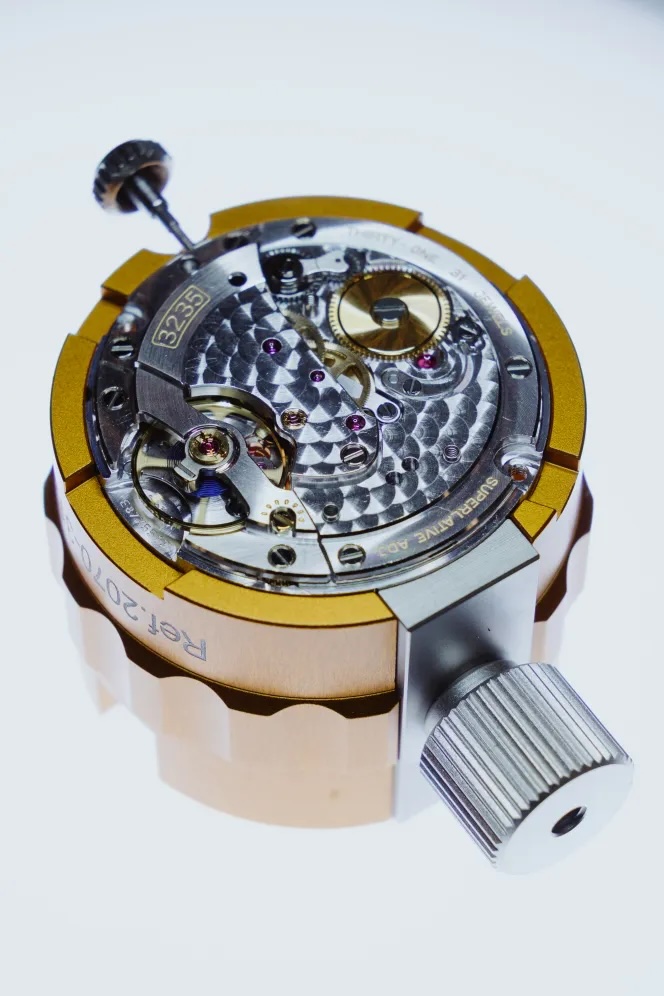
The interior of a watch. Even a distortion of a few microns can cause it to run fast or slow
Shelby Tauber for the times
But despite the high-powered roles and hefty compensation packages, O’Banner, 38, was done. She was sick of “talking to pixels” on a screen. This yearning to work offline and with her hands brought her to the workbench at the newly minted Rolex Watchmaking Training Centre. Now she sits in the quiet training room in the heart of Uptown Dallas, working on mechanical watches worth around $10,000 — the antithesis of the digital world she helped to create.
O’Banner is one of 27 students who beat hundreds of candidates to win a coveted place on an 18-month course to become Rolex-certified watchmakers. Since opening to the public, interest in the school has soared, with students uprooting their lives from as far as Alaska and Hawaii to join. For the upcoming cohort starting in August, 626 people applied, a 50 per cent increase compared with 2024. This puts the school’s admission rate at just over 4 per cent — akin to Harvard’s. Many applicants are inspired by popular watchmaking YouTube channels and fret about the admissions process on lengthy Reddit threads. Some candidates go to great lengths to get noticed — contacting instructors on LinkedIn (top tip: they don’t like this) or showing up at the Dallas school.
The college is the luxury brand’s answer to the shortage of US watchmakers. The company sells an estimated one million watches annually and they recommend customers get their timepieces serviced every decade. There are currently around 2,000 watchmakers and Rolex estimates it needs 30 to 40 watchmakers each year to fill positions at its retail partners and its in-house workshops. Demand is high: the last class landed jobs averaging $96,000. This year’s offers have been exceptional, with one student receiving a six-figure offer to move to Arkansas, plus weekly, monthly and annual bonuses.
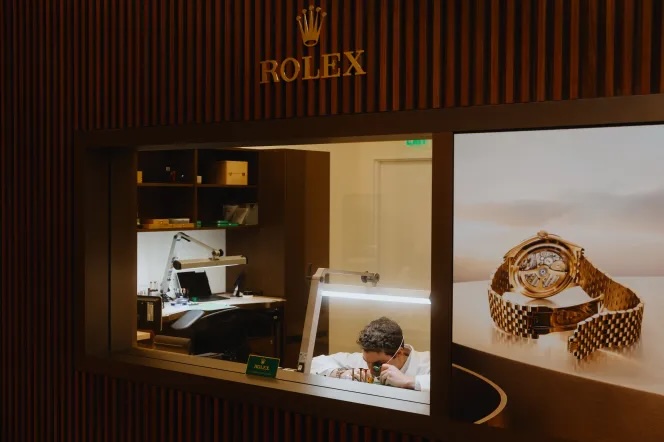
Located on the fourth floor of the sleek granite and glass Rolex building in the city’s Uptown area, near Y’all Street, the state’s burgeoning financial district, the school spans six bright training rooms and a polishing room. The second floor is an official service centre, where over 75 watchmakers service timepieces in a sort of laser-focused assembly line. During their breaks, watchmakers sit in the cafeteria playing dominoes with their magnifying loupes resting on their foreheads. After her training, one former student Cabriahn Yancy, landed a job in the Dallas centre. If she passes her final exams, O’Banner will join her — she has been offered an in-house watchmaking role for less than a third of her previous salary.
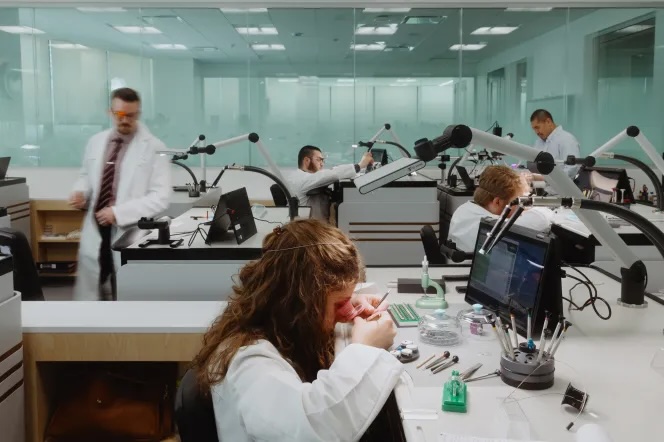
This is the second cohort the Rolex watchmaking training program has had, in a highly competitive course
Shelby Tauber for the times
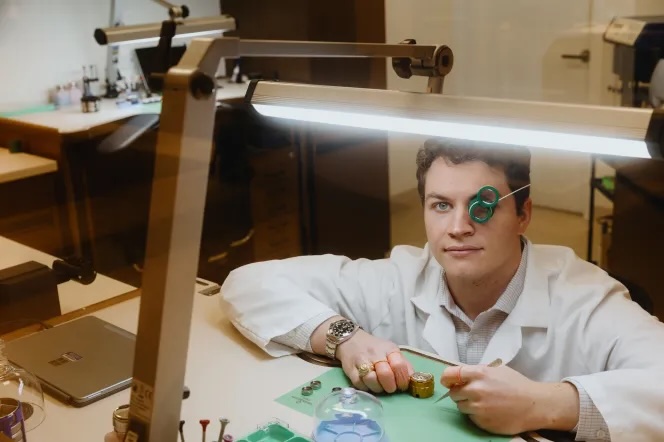
Blake Richardson, a recent graduate of the Rolex Training Center, now working in Bachendorf’s in Dallas
Shelby Tauber for the times
The training rooms, lit by by floor-to-ceiling windows, feature ergonomic workbenches equipped with drawers of tools and machines to measure watch performance. On the floor, cleanliness is paramount, explains Tyler Poso, 40, an instructor with a long, wiry beard of strawberry blond hair mixed with grey. The watch’s escapement is “like a magnet to every little fleck of dust,” he says. “If debris gets into that lubrication and contaminates it, it affects the distribution of energy, which in turn affects the time keeping of the balance — you just end up with a toy that’s moving hands around and not telling you the time correctly.”
Eating is banned on the floor. There are blue sticky mats in the entryways to pick up dust from your shoes and all students wear finger cots (gloves for your fingers) when working in the sterile rooms. For the past nine months, the students have spent from 8am to 4pm, Monday to Friday, learning the watchmaking trade. After beginning with micromechanics, which involves learning to file and shape tiny metal components within a hundredth of a millimetre, they moved on to quartz movements and lubrication. Now they are practising the full servicing of a Rolex timepiece, including waterproofing and polishing. The students are tested at the end of each module. If they fail more than once they are dismissed from the programme, and a handful of students don’t make it each year. During the final six months, trainees apply their skills to customer watches sent in for repair while working under supervision. The course culminates in a three-day examination in Geneva, which includes the full servicing of a watch with introduced errors.
Read more at The Times.